Sports and Recreational Dental Injuries: Prevention, First Aid, and Emergency Care During the FIFA Season
Sports and Recreational Dental Injuries: Prevention, First Aid, and Emergency Care During the FIFA Season
With the excitement of the FIFA tournament coming to Toronto and the Greater Toronto Area, more children, teenagers, and adults will be enjoying soccer and many other outdoor sports and recreational activities. Whether you are playing soccer, hockey, basketball, baseball, volleyball, or simply riding a bicycle, e-bike, electric scooter (e-scooter), skateboard, rollerblades, skis, or snowboard, protecting your teeth should be just as important as protecting your head and joints.
Unfortunately, dental injuries are among the most common injuries associated with sports and recreational activities. A single collision, fall, or impact can chip, crack, loosen, or even completely knock out a tooth. The good news is that many of these injuries are preventable, and when they do occur, knowing what to do during the first few minutes can make the difference between saving and losing a tooth.
At Fort York Dentist, we regularly treat dental emergencies caused by sports and recreational accidents. Here is what every athlete, parent, and active individual should know to protect their smile.
How Common Are Sports-Related Dental Injuries?
Dental trauma accounts for a significant number of emergency dental visits every year. Children and teenagers are particularly susceptible because they participate in contact sports and outdoor activities, but adults are also frequently injured while playing sports or commuting on bicycles and e-scooters. Even activities that seem relatively safe can result in serious injuries to the teeth and mouth.
The upper front teeth are the most commonly injured because they are the most exposed during an impact.
Common Types of Dental Injuries
Chipped or Broken Teeth
A chipped tooth may appear to be only a cosmetic problem, but even a small fracture can expose the inner layers of the tooth, leading to sensitivity, infection, or further cracking.
Fortunately, many chipped teeth can be restored beautifully with tooth-coloured composite bonding or porcelain restorations.
Cracked Teeth
Cracks are often difficult to see without a dental examination.
Symptoms may include:
- Pain when biting
- Sensitivity to hot or cold foods
- Intermittent discomfort
- Swelling around the tooth
If left untreated, cracks may extend deeper into the tooth and eventually require root canal treatment or even extraction.
Teeth That Have Been Moved Out of Position
A strong blow may push a tooth inward, outward, or sideways.
These injuries require prompt dental treatment because early repositioning greatly improves the long-term prognosis.
Loose Teeth
A tooth that becomes loose after an accident often indicates damage to the supporting bone and periodontal ligament.
Even if there is little pain, prompt examination is essential because timely treatment can often save the tooth.
Knocked-Out Teeth (Avulsed Teeth)
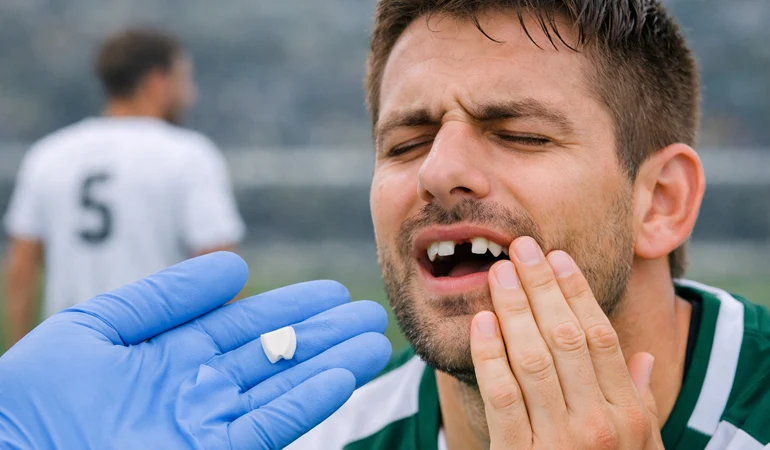
A tooth that has been completely knocked out is one of the most urgent dental emergencies.
A permanent tooth can often be successfully replanted if treated quickly. Ideally, treatment should begin within 30 to 60 minutes of the injury.
Bone Fracture
In severe trauma, the jawbone or surrounding facial bones may fracture. This type of injury can cause significant pain, swelling, bruising, difficulty opening or closing the mouth, and changes in how the teeth fit together. If a fracture is suspected, it is important to seek immediate medical attention, as proper diagnosis and treatment are essential to ensure correct healing and to prevent long-term complications.
What Should You Do Immediately After Dental Trauma?
The first few minutes following a dental injury are extremely important. Staying calm and acting quickly can significantly improve the chances of saving the injured tooth.
If a Permanent Tooth Has Been Knocked Out
- Stay calm and locate the tooth.
- Pick it up only by the crown (the white chewing surface). Never touch the root.
- If the tooth is dirty, gently rinse it with cold milk or sterile saline for a few seconds. Do not scrub it.
- If possible, gently place the tooth back into its socket.
- Bite gently on clean gauze or a clean cloth to hold it in place.
- If the tooth cannot be replanted, keep it moist by placing it in:
- Cold milk (the preferred option)
- Sterile saline
- A commercial tooth preservation solution (if available)
- Inside the person’s cheek (only if there is no risk of swallowing it)
- Contact Fort York Dentist or the nearest emergency dentist immediately.
Every minute counts. The sooner the tooth is replanted, the greater the chance of saving it.
If a Baby Tooth Is Knocked Out
Baby teeth should never be replanted because doing so may damage the developing permanent tooth underneath.
Instead:
- Apply gentle pressure to stop any bleeding.
- Use a cold compress to reduce swelling.
- Contact your children’s dentist promptly for an examination.
If a Tooth Is Broken or Chipped
- Rinse your mouth gently with clean water.
- Apply a cold compress to reduce swelling.
- Avoid chewing on the injured side.
- Contact your dentist as soon as possible.
Sometimes the broken fragment can be bonded back onto the tooth, providing an excellent cosmetic result.
If a Tooth Is Loose or Has Moved
Do not attempt to push the tooth back into position yourself.
Avoid biting on the tooth and seek emergency dental care immediately. Early treatment significantly improves the chances of preserving the tooth.
Injuries to the Lips, Tongue, and Gums
Sports and recreational accidents often injure the soft tissues of the mouth.
If this happens:
- Apply gentle pressure with clean gauze.
- Use a cold compress to reduce swelling.
- If bleeding continues for more than 15 minutes or the wound is deep, seek emergency medical attention.
Jaw Injuries and Concussions
A strong impact may also injure the jaw or cause a concussion.
Seek immediate medical attention if the injured person:
- Loses consciousness
- Has persistent dizziness or confusion
- Experiences severe headache or vomiting
- Cannot open or close the mouth normally
- Has severe jaw pain
- Notices that the teeth no longer fit together properly
- Suspects a broken jaw or facial bone
Your overall health always takes priority. Once any serious medical injuries have been addressed, your dentist can evaluate and treat the dental injuries.
Why You Should Never Ignore a Dental Injury
Some injuries appear minor immediately after the accident, but hidden damage may develop over time.
Possible complications include:
- Root fractures
- Damage to the dental pulp (nerve)
- Injury to the supporting bone
- Infection
- Internal bleeding inside the tooth
- Tooth discoloration
- Loss of tooth vitality
- Damage to developing permanent teeth in children
These problems may not become obvious until weeks or even months after the injury.
For this reason, every dental injury should be evaluated by a dentist — even if there is little or no pain.
Prevention Is Always Better Than Treatment
The majority of sports-related dental injuries can be prevented. Although wearing a helmet is necessary for many activities, it is not enough.
Wear a Custom Sports Mouthguard
A professionally made custom mouthguard is one of the best investments you can make for protecting your smile.
Compared with over-the-counter “boil-and-bite” mouthguards, a custom-made mouthguard:
- Fits comfortably
- Stays securely in place
- Makes breathing and speaking easier
- Offers superior protection
- Lasts longer
- Provides better shock absorption
Because it is made specifically for your teeth, it protects them much more effectively than store-bought alternatives.
Which Sports and Activities Should Use a Mouthguard?
Dentists recommend wearing a mouthguard whenever there is a possibility of contact, collision, or falls.
This includes sports such as soccer, hockey, basketball, and baseball, as well as activities like cycling, skateboarding, and electric scooter riding.
Even a casual ride through your neighbourhood or local park can end with an unexpected fall.
Protecting Children
Children are especially vulnerable to dental injuries because they are active and still developing coordination.
Parents should:
- Ensure children wear custom mouthguards during sports.
- Make sure helmets fit properly.
- Replace damaged protective equipment.
- Encourage safe play.
- Arrange a dental examination after any injury involving the mouth.
Preventing a dental injury is far easier — and much less expensive — than replacing a permanent tooth.
What Happens at Fort York Dentist After a Dental Injury?
Every dental injury is unique, and treatment depends on the type and severity of the trauma. A comprehensive exam and radiographs will determine the treatment plan. Most of the time, follow-up visits are necessary for 3–6 months. Whenever possible, our goal is to preserve your natural teeth and restore both function and appearance.
Don’t Wait After a Dental Injury
Many people delay treatment because the pain seems mild or disappears after a few hours. Unfortunately, waiting can reduce the chances of saving an injured tooth and may result in more complex and expensive treatment later.
If you or a family member experiences a dental injury while playing sports or after a bicycle, e-bike, e-scooter, skateboard, skiing, rollerblading, or other recreational accident, contact Fort York Dentist immediately.
Prompt assessment and treatment can often save teeth, prevent long-term complications, and help you return to your normal activities with confidence.
Enjoy the Game — Protect Your Smile
With FIFA bringing even more excitement and participation in sports throughout our community, now is the perfect time to think about protecting your smile.
Whether you’re a competitive athlete, a weekend soccer player, a cyclist, an e-scooter rider, or the parent of an active child, taking simple preventive measures today can help you avoid a serious dental emergency tomorrow.
At Fort York Dentist, we provide custom sports mouthguards, emergency dental care, and comprehensive treatment for sports- and recreation-related dental injuries. If you or someone you love experiences dental trauma, don’t wait. Contact our office immediately at (647) 346-8888 or visit us at 219 Fort York Blvd Unit 107, Toronto, ON M5V 1B1 so we can help preserve your smile for years to come.
Related posts

Recent Posts

What to Do When You Have a Dental Emergency


Client Testimonials
The Fort York Dentist team is amazing. I’ve been a patient here for the last few years and they’ve consistently accommodated my schedule and my needs. I’ve also had a positive experience with Invisalign procedure at this clinic.

Tetyana Krysa
I’ve moved away from Toronto and I miss Dr. Hosseini! Competent, kind, reassuring and even a little bit fun! She took extra time to fully explain what she was doing to help me. A terrific dentist & good hygienists staff.
Janine Gliener
I have been coming to Fort York Dentist for several years and have had a consistently pleasant experience. The team is friendly and welcoming, and I appreciate the care they take in cleaning my teeth. Their attention to detail and gentle approach always leaves me with a reason to smile! 😀