I’m Afraid of Tooth Extractions — What Should I Expect?

I’m Afraid of Tooth Extractions — What Should I Expect?
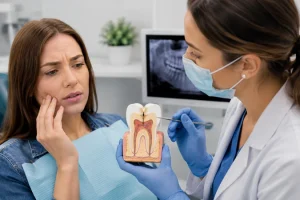
Many people feel nervous when they hear the words “tooth extraction”. Some patients worry about pain, while others are afraid of the procedure itself or have heard frightening stories from friends or family.
The good news is that modern dentistry has made tooth extractions much more comfortable than most people expect. At Fort York Dentist, our goal is to make every patient feel safe, informed, and comfortable throughout the entire process.
Our Philosophy: Saving Teeth Comes First
At Fort York Dentist, we believe that your natural teeth are always worth saving whenever possible. Before recommending an extraction, we carefully evaluate whether the tooth can be restored with a filling, crown, root canal treatment, or periodontal therapy.
An extraction is recommended only when it is the healthiest and most predictable long-term solution. Our goal is never simply to remove a tooth — it is to protect your overall oral health.
Why Might a Tooth Need to Be Removed?
A tooth extraction may be necessary when:
- A tooth is severely decayed and cannot be restored.
- A tooth has advanced gum disease with significant bone loss.
- A tooth is badly fractured below the gum line.
- A wisdom tooth is causing pain, infection, or damage to neighboring teeth.
- There is a severe dental infection that cannot be treated successfully.
- Orthodontic treatment requires the removal of specific teeth.
- A tooth has a poor long-term prognosis despite previous treatment.
Your dentist will always explain why an extraction is recommended and discuss any possible alternatives before treatment.
Will the Extraction Hurt?
This is the question we hear most often.
The answer is no — the procedure itself should not be painful.
Before the extraction begins, the area is completely numbed with local anesthesia. During the procedure, you may feel pressure or movement, but you should not feel sharp pain.
If you experience discomfort at any time, simply let your dentist know. Additional anesthetic can be provided to ensure you remain comfortable.
What Happens During the Appointment?
Every extraction is different, but most appointments follow these steps:
- A thorough examination and digital X-rays are completed.
- Your dentist explains the diagnosis, treatment options, and answers your questions.
- Local anesthesia is administered to completely numb the area.
- The tooth is gently removed using specialized instruments and modern techniques.
- When necessary, the extraction site is cleaned and sutures are placed.
- Gauze is applied to help control bleeding, and detailed post-operative instructions are provided.
Many patients are pleasantly surprised by how quick and comfortable the procedure is.
Modern Technology for Comfortable Care
At Fort York Dentist, your comfort and safety are our priorities.
For patients who feel anxious or who require more complex extractions, we offer conscious sedation when clinically appropriate. Conscious sedation helps patients feel relaxed and comfortable throughout the procedure while remaining able to respond to verbal instructions. Before recommending sedation, we will carefully review your medical history to determine whether it is appropriate for you.
Following certain extractions, we may also use a dental diode laser to support healing. Laser therapy helps coagulate small blood vessels, assisting with bleeding control, reducing bacteria within the extraction site, and promoting soft tissue healing. Many patients also experience improved comfort during the early stages of recovery. Your dentist will determine whether laser therapy is beneficial for your individual situation.
Atraumatic Tooth Extractions and Socket Preservation
Whenever possible, we perform atraumatic (minimally traumatic) tooth extractions using modern techniques designed to preserve the surrounding bone and soft tissues. By minimizing unnecessary trauma during the procedure, we aim to reduce post-operative discomfort, promote faster healing, and preserve the natural anatomy of the extraction site.
When clinically indicated, we also offer socket preservation (bone grafting) immediately after the extraction. This procedure helps reduce the natural bone loss that occurs after a tooth is removed and may improve the long-term success of future treatment, such as dental implants or fixed bridges. Preserving the bone can also help maintain the natural contour of your gums and jaw.
Not every patient requires socket preservation. Your dentist will carefully evaluate your individual situation and discuss whether this treatment would provide a long-term benefit.
Our goal is not simply to remove a tooth — we strive to preserve as much healthy bone and tissue as possible while planning for your future oral health.
What Is the Difference Between a Simple and a Surgical Extraction?
A simple extraction is performed when the tooth is fully visible and can be removed without additional surgical procedures.
A surgical extraction may be required when:
- The tooth has broken below the gum line.
- The roots are unusually curved or difficult to remove.
- The tooth is partially or completely impacted.
- A wisdom tooth requires surgical access.
Although surgical extractions are more complex, they are routinely performed using modern techniques designed to minimize discomfort and promote healing.
What Should I Expect After the Extraction?
Some soreness, swelling, and mild discomfort are normal during the first few days.
Most patients recover very well by following the post-operative instructions provided by their dentist.
To help your recovery:
- Bite gently on the gauze as instructed.
- Take prescribed or recommended medications as directed.
- Eat soft foods for the first few days.
- Avoid smoking or vaping.
- Avoid drinking through a straw.
- Keep the area clean according to your dentist’s instructions.
- Rest on the day of the procedure and avoid strenuous exercise for the first 24–48 hours.
If you experience excessive bleeding, severe swelling, fever, or worsening pain several days after the extraction, contact our office promptly.
Most people return to normal daily activities within one or two days after a simple extraction, while more complex procedures may require a slightly longer recovery period.
Emergency Tooth Extractions
A severe toothache, swelling, or dental infection can happen unexpectedly.
Whenever possible, Fort York Dentist offers prompt appointments for patients experiencing dental emergencies. Our priority is to relieve your pain, diagnose the cause of the problem, and recommend the most appropriate treatment. In many cases, a tooth can still be saved. If an extraction is necessary, we will perform it as comfortably and conservatively as possible.
What If My Wisdom Tooth Needs to Be Removed?
Wisdom teeth are among the most common teeth requiring extraction.
Removal may be recommended if they are:
- Causing pain.
- Repeatedly becoming infected.
- Trapped beneath the gums.
- Damaging neighboring teeth.
- Difficult to keep clean.
- Contributing to gum disease or decay.
Not every wisdom tooth needs to be removed. Your dentist will carefully evaluate your individual situation and explain whether monitoring or extraction is the better option.
Can the Missing Tooth Be Replaced?
If a non-wisdom tooth is removed, replacing it is often recommended to maintain proper chewing function, prevent neighboring teeth from shifting, and preserve your bite.
Replacement options may include:
- Dental implants
- Dental bridges
- Partial dentures
Your dentist will discuss which option is most appropriate for your specific needs.
Why Choose Fort York Dentist for Your Tooth Extraction?
Patients choose Fort York Dentist because we provide:
- Gentle, compassionate care.
- Simple and surgical tooth extractions.
- Wisdom tooth extractions.
- Conscious sedation for appropriate patients.
- Atraumatic extraction techniques.
- Diode laser therapy to support healing.
- Socket preservation when indicated.
- Modern digital imaging.
- Clear explanations of all treatment options.
- A commitment to preserving natural teeth whenever possible.
Frequently Asked Questions
How long does an extraction take?
Many extractions are completed within 20 to 40 minutes, although more complex surgical cases may require additional time.
Will I be awake during the procedure?
Most extractions are comfortably performed using local anesthesia. For anxious patients or certain surgical procedures, conscious sedation may also be available when appropriate.
Can I drive home after conscious sedation?
Depending on the type of sedation used, you may need someone to drive you home. We will provide specific instructions before your appointment.
How long does healing take?
Initial healing usually occurs within one to two weeks. Complete healing of the bone takes several months.
What is a dry socket?
A dry socket occurs when the protective blood clot becomes dislodged before the extraction site has healed. Following your post-operative instructions significantly reduces this risk.
Can I go back to work the next day?
Many patients return to work or school the following day after a simple extraction. More complex surgical extractions may require additional recovery time.
Should I remove a tooth if it can still be saved?
Whenever possible, preserving your natural tooth is the best option. An extraction is recommended only when the tooth cannot be predictably restored or when keeping it would compromise your long-term oral health.
Compassionate Care at Fort York Dentist
We understand that having a tooth removed can feel overwhelming. Our team takes the time to explain every step of the procedure, answer your questions, and make sure you are as comfortable as possible.
Using modern techniques — including atraumatic tooth extraction, conscious sedation for appropriate patients, diode laser therapy to support healing, and socket preservation when indicated — we strive to make your experience as comfortable as possible while protecting your long-term oral health.
If you are experiencing tooth pain or have been told you may need an extraction, contact Fort York Dentist to schedule a consultation, or call us at (647) 346-8888. We will carefully evaluate your condition, discuss all available treatment options, and help you make the decision that is best for your long-term oral health.
Fort York Dentist is located at 219 Fort York Blvd Unit 107, Toronto, ON M5V 1B1.
Related posts


Recent Posts


Client Testimonials
The Fort York Dentist team is amazing. I’ve been a patient here for the last few years and they’ve consistently accommodated my schedule and my needs. I’ve also had a positive experience with Invisalign procedure at this clinic.

Tetyana Krysa
I’ve moved away from Toronto and I miss Dr. Hosseini! Competent, kind, reassuring and even a little bit fun! She took extra time to fully explain what she was doing to help me. A terrific dentist & good hygienists staff.
Janine Gliener
I have been coming to Fort York Dentist for several years and have had a consistently pleasant experience. The team is friendly and welcoming, and I appreciate the care they take in cleaning my teeth. Their attention to detail and gentle approach always leaves me with a reason to smile! 😀