Can a Cracked Tooth Be Saved? A Complete Guide from Fort York Dentist
Can a Cracked Tooth Be Saved? A Complete Guide from Fort York Dentist
A cracked tooth can happen suddenly after biting something hard or develop gradually over many years from normal wear and tear. Regardless of how it occurs, one question worries almost every patient: Can a cracked tooth be saved? In many cases, the answer is yes—especially when the tooth is diagnosed and treated early. At Fort York Dentist, we help patients throughout Toronto preserve their natural teeth using modern diagnostic technology and personalized treatment plans.
Whether your crack is barely noticeable or causing sharp pain, understanding your options is the first step toward the right cracked tooth treatment.
What Is a Cracked Tooth?
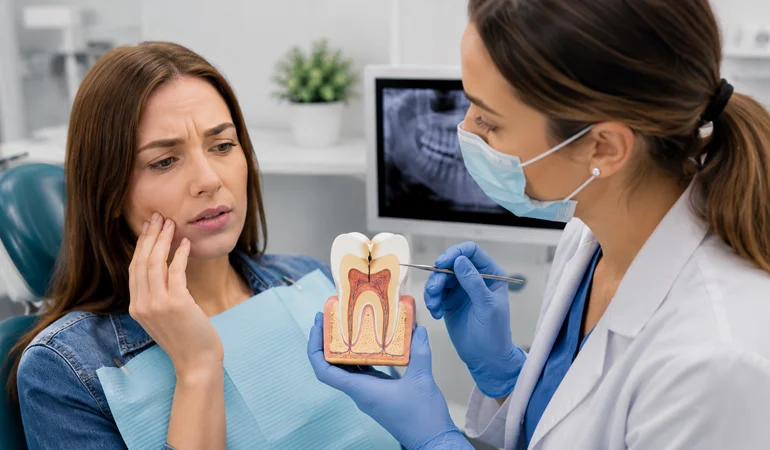
A cracked tooth is a tooth that has developed a fracture. The crack may be very small and limited to the enamel, or it may extend deep into the tooth toward the pulp (the nerve) or even into the root.
Some cracks are visible, while others are microscopic and difficult to detect, which is why the cracked tooth syndrome described by dental researchers is notoriously hard to diagnose. Patients may experience real pain even when no obvious damage can be seen.
What Causes a Cracked Tooth?
Several factors can contribute to a cracked tooth, including:
- Biting on hard foods such as ice, popcorn kernels, or hard candies
- Teeth grinding or clenching (bruxism)
- Large fillings that weaken the remaining tooth structure
- Trauma from sports injuries or accidents
- Sudden temperature changes, such as drinking hot coffee followed by ice water
- Natural wear and tear as we age
Anyone can develop a cracked tooth, but the risk increases over time because teeth are subjected to years of chewing forces.
Symptoms of a Cracked Tooth
Symptoms vary depending on the location and depth of the crack. Common signs include:
- Pain when biting or chewing
- Pain when releasing biting pressure
- Sensitivity to cold, hot, or sweet foods
- Intermittent discomfort that comes and goes
- Swelling of the gum near the affected tooth
- Difficulty identifying which tooth hurts
Some cracked teeth produce no symptoms at all and are only discovered during a routine dental exam. If you notice sudden swelling or severe pain, don’t wait—contact an emergency dentist Toronto patients rely on right away.
Can a Cracked Tooth Be Saved?
In many cases, yes. Whether a cracked tooth can be saved depends on several factors:
- The depth of the crack
- The location of the crack
- Whether the pulp has been affected
- Whether the crack extends below the gum line
- How quickly treatment is started
The sooner a cracked tooth is diagnosed, the better the chance of preserving it. This is one of the main reasons patients ask their dentist in Toronto, “can a cracked tooth be saved?” as soon as symptoms appear rather than waiting to see if the pain goes away on its own.
Types of Cracks and Their Treatment
Craze lines are tiny cracks limited to the enamel. They’re extremely common and usually need no treatment beyond routine monitoring.
Fractured cusp occurs when part of the chewing surface breaks, often around an existing filling. The nerve is often unaffected, making this one of the easiest cracks to treat with a replacement restoration, onlay, or crown.
Cracked tooth describes a crack that extends from the chewing surface toward the root. This is the classic case patients mean when they ask, “can a cracked tooth be saved?” Treatment depends on how far the crack has progressed, but many teeth respond well to a dental crown, root canal treatment if the nerve is damaged, and close monitoring afterward.
Split tooth is a crack that has progressed completely through the tooth, separating it into two segments. Unfortunately, these teeth usually cannot be fully saved, and extraction is often necessary.
Vertical root fracture begins in the root and travels upward, often producing few symptoms until infection develops. Most vertical root fractures cannot be repaired and typically require extraction.
How Is a Cracked Tooth Diagnosed?
Diagnosing a cracked tooth can be challenging because the crack may not appear clearly on a standard X-ray. Your dentist in Toronto may use several methods, including:
- Clinical examination
- Magnification and special lighting
- Bite tests
- Periodontal probing
- Dental radiographs
- Cone Beam CT (CBCT) imaging when indicated
Our team carefully evaluates every suspected cracked tooth before recommending treatment, ensuring an accurate diagnosis and the most appropriate cracked tooth treatment for your situation.
Why Early Treatment Matters
Small cracks often become larger over time. Every time you chew, the crack may open slightly, allowing bacteria to enter the tooth and infect the pulp, which can lead to severe pain or an abscess.
Treating a cracked tooth early is almost always simpler, less expensive, and more predictable than waiting until extensive damage has occurred.
Cracked Tooth Treatment Options
Cracked tooth treatment depends on the diagnosis and may include dental bonding, dental crowns, root canal therapy, or extraction.
- Dental bonding: Minor enamel cracks can sometimes be repaired with tooth-colored composite resin.
- Dental crowns: A dental crown completely covers the tooth, helping hold it together and protecting it from further fracture. This is one of the most common treatments for a cracked tooth.
- Root canal therapy: If the crack has reached the pulp, root canal therapy removes the infected tissue before a crown is placed to restore strength.
- Extraction and replacement: If the crack extends too far below the gum line or into the root, the tooth may no longer be restorable. In these cases, dental implants or bridges can restore function and appearance.
Can a Crown Prevent Further Cracking?
Yes. A crown acts like a protective helmet around the tooth, reducing the forces that can cause a crack to spread. However, a crown cannot “heal” the crack—it simply stabilizes the tooth and protects it from further damage.
Can a Cracked Tooth Heal on Its Own?
No. Unlike a broken bone, tooth enamel cannot regenerate. Once a crack develops in a tooth, it remains permanently, and professional cracked tooth treatment is needed to prevent it from worsening.
How Can You Prevent a Cracked Tooth?
According to oral health guidance from the Government of Canada, regular checkups and good daily habits play a major role in preventing dental damage. Simple preventive measures include:
- Wearing a custom night guard if you grind your teeth
- Avoiding chewing ice or hard objects
- Never using your teeth to open packages
- Wearing a sports mouthguard during contact sports
- Attending regular dental examinations
- Replacing failing large fillings before they weaken the tooth
Why Patients in Toronto Choose Fort York Dentist for Cracked Teeth
If you have pain when biting, sensitivity to cold, or believe you may have a cracked tooth, our experienced team is here to help. We provide:
- Comprehensive examinations
- Digital dental X-rays
- CBCT imaging when indicated
- Tooth-colored restorations
- High-quality dental crowns
- Root canal treatment
- Emergency dental appointments whenever possible
- Dental implant replacement if a tooth cannot be saved
Our goal is always to preserve your natural tooth whenever possible and to provide treatment that is comfortable, predictable, and long-lasting.
Schedule an Appointment at Fort York Dentist
If you think you have a cracked tooth, don’t wait until the pain becomes severe. Early diagnosis can often mean the difference between saving and losing a tooth.
Whether you need an emergency dental exam, a dental crown, root canal treatment, or simply reassurance that your tooth is healthy, the team at Fort York Dentist is here to help. As a trusted emergency dentist Toronto patients turn to for urgent care, we work hard to see cracked tooth cases quickly.
Call Fort York Dentist at (647) 346-8888 today or book your appointment online to protect your smile before a small crack becomes a bigger problem.
Frequently Asked Questions (FAQs)
1. Can a cracked tooth be saved without a root canal?
Yes. If the crack has not reached the pulp (nerve), many teeth can be saved with a crown or other restoration without requiring root canal treatment.
2. How do I know if my tooth is cracked?
Common symptoms include pain when biting, sensitivity to cold or sweets, and discomfort that comes and goes. Some cracks have no symptoms and are found during a dental examination.
3. Is a cracked tooth a dental emergency?
If you have severe pain, swelling, or difficulty biting, you should see a dentist as soon as possible. Contacting an emergency dentist Toronto residents trust early often improves the chances of saving the tooth.
4. Will a cracked tooth always need to be removed?
No. Many cracked teeth can be successfully treated and preserved with the right cracked tooth treatment. Extraction is usually considered only when the crack extends deep into the root or below the gum line.
5. Can I wait if the pain goes away?
No. A cracked tooth often causes intermittent symptoms. Even if the discomfort disappears temporarily, the crack may continue to worsen over time.
6. Can a cracked tooth be repaired permanently?
Treatment can stabilize and protect the tooth for many years. Long-term success depends on the type of crack, how early it was treated, and maintaining good oral hygiene and regular dental checkups.
7. Does dental insurance cover treatment for a cracked tooth?
Many dental insurance plans provide coverage for examinations, crowns, root canal treatment, and other necessary procedures, although the amount covered varies by plan. Our team is happy to help you understand your benefits before treatment begins.
Related posts


Recent Posts

What to Do When You Have a Dental Emergency


Client Testimonials
The Fort York Dentist team is amazing. I’ve been a patient here for the last few years and they’ve consistently accommodated my schedule and my needs. I’ve also had a positive experience with Invisalign procedure at this clinic.

Tetyana Krysa
I’ve moved away from Toronto and I miss Dr. Hosseini! Competent, kind, reassuring and even a little bit fun! She took extra time to fully explain what she was doing to help me. A terrific dentist & good hygienists staff.
Janine Gliener
I have been coming to Fort York Dentist for several years and have had a consistently pleasant experience. The team is friendly and welcoming, and I appreciate the care they take in cleaning my teeth. Their attention to detail and gentle approach always leaves me with a reason to smile! 😀