Atraumatic Tooth Extraction with Socket Preservation
Atraumatic Tooth Extraction with Socket Preservation
A Simple Patient Guide – Fort York Dentist
When a tooth needs to be removed, many patients worry about pain, healing time, and what will happen to the bone and gums afterward. At Fort York Dentist, we use modern techniques such as atraumatic tooth extraction combined with socket preservation to make the process gentler, safer, and more predictable.
This advanced approach helps preserve your natural bone and gum tissue, which is especially important if you are considering a dental implant or want to maintain your facial appearance.
This guide explains everything in simple, easy-to-understand language.
What Is Atraumatic Tooth Extraction?
An atraumatic extraction means removing a tooth as gently as possible, with minimal damage to the surrounding bone and gums.
Traditional extractions often involve strong force and sometimes removal of bone. In contrast, atraumatic extraction uses special instruments and techniques to carefully loosen the tooth from its surrounding tissues.
The main goals are:
- Minimal trauma to bone and gums
- Less pain and swelling
- Faster healing
- Better results for future treatments
What Is Socket Preservation?
After a tooth is removed, it leaves an empty space in the jawbone called a socket.
Without treatment, the body naturally starts to lose bone in that area. This bone loss can happen quickly and may lead to:
- Shrinking of the jawbone
- Receding gums
- Sunken facial appearance
- Difficulty placing an implant later
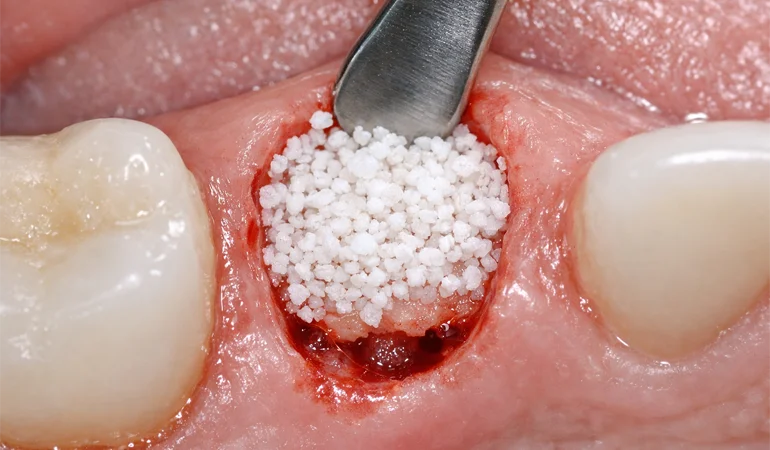
Socket preservation is a procedure where a bone graft material is placed into the socket immediately after the tooth is removed. This helps maintain the natural shape and volume of the bone and gums.
Why Is This Procedure Important?
Atraumatic extraction with socket preservation is especially important if:
- You plan to replace the tooth with an implant
- The tooth is in the front (smile zone)
- You want the most natural cosmetic result
- You want to avoid major bone grafting later
Preserving bone now makes future treatment:
- Easier
- More predictable
- Less invasive
- More affordable in the long term
How Is the Procedure Done?
Step 1: Local Anesthesia
The area is fully numbed. You should not feel pain, only mild pressure.
Step 2: Gentle Tooth Loosening
Special thin instruments are used to separate the tooth from the surrounding ligament and bone.
Step 3: Tooth Removal
The tooth is carefully removed without damaging the surrounding structures.
Step 4: Socket Preservation
Bone graft material is placed into the socket. A collagen membrane may be added, and sometimes a few stitches are placed.
Step 5: Healing
The area heals naturally over the next few months while new bone forms.
What Materials Are Used for Socket Preservation?
Most of the time, only synthetic bone material is used.
Synthetic bone graft material is:
- Safe and biocompatible
- Free from disease transmission
- Highly predictable
- Well-accepted by the body
It acts as a framework that allows your own natural bone to grow and replace it over time.
This makes it an excellent choice for routine socket preservation procedures.
Benefits of Atraumatic Extraction with Socket Preservation
This modern technique offers many advantages:
- Less post-operative pain
- Reduced swelling and bleeding
- Faster healing
- Maintained jawbone volume
- Better gum appearance
- Improved success of dental implants
- Reduced need for future bone grafting
Healing Timeline
Most patients experience:
- First 2–3 days: mild soreness and swelling
- 1 week: gums start closing
- 2 weeks: normal daily function
- 3–4 months: bone is ready for implant placement
Is It Painful?
Most patients report very little discomfort, often less than with traditional tooth extractions. Pain is usually managed with:
- Over-the-counter medication
- Ice packs
- Soft foods
What Happens If Socket Preservation Is Not Done?
Without socket preservation:
- Bone loss occurs quickly
- Gums collapse inward
- Implants may not fit properly
- More complex surgery may be required later
- Final cosmetic result may be compromised
Who Is a Good Candidate?
You are an ideal candidate if:
- You plan for a dental implant
- You want to preserve your smile aesthetics
- The tooth is visible when you smile
- You want long-term oral health stability
Frequently Asked Questions (FAQ)
Is atraumatic extraction better than normal extraction?
Yes. It preserves bone and soft tissue, leading to better healing and long-term outcomes.
Do I always need socket preservation?
Not always, but it is highly recommended for future implants or cosmetic areas.
Can I get an implant right away?
Sometimes yes. This depends on bone quality, infection, and stability.
Is synthetic bone safe?
Yes. Synthetic bone is widely used and has an excellent safety record.
How long does healing take?
Initial healing takes 1–2 weeks. Full bone healing takes about 3–4 months.
Can I eat after the procedure?
Yes, stick to soft foods for the first few days.
Can I smoke?
Smoking should be avoided for at least 72 hours, ideally longer.
Is socket preservation covered by insurance?
Some plans cover part of it. Coverage varies.
What are the risks?
Minimal risks such as mild infection or swelling. Serious complications are rare.
Is it worth doing?
Absolutely. It prevents bone loss and saves time, money, and surgery later.
Final Thoughts – Fort York Dentist
Atraumatic extraction with socket preservation is one of the most advanced and patient-friendly methods for tooth removal. It protects your bone, improves healing, and prepares your mouth for long-term success.
At Fort York Dentist, we focus on gentle, modern dentistry that prioritizes comfort, function, and aesthetics. If you need a tooth removed, ask us about atraumatic extraction with socket preservation — it’s one of the best investments you can make in your future smile.
Related posts


Recent Posts


Atraumatic Tooth Extraction with Socket Preservation

Why Teeth Alignment Matters: The Importance of Orthodontic Treatment
Client Testimonials
The Fort York Dentist team is amazing. I’ve been a patient here for the last few years and they’ve consistently accommodated my schedule and my needs. I’ve also had a positive experience with Invisalign procedure at this clinic.

Tetyana Krysa
I’ve moved away from Toronto and I miss Dr. Hosseini! Competent, kind, reassuring and even a little bit fun! She took extra time to fully explain what she was doing to help me. A terrific dentist & good hygienists staff.
Janine Gliener
I have been coming to Fort York Dentist for several years and have had a consistently pleasant experience. The team is friendly and welcoming, and I appreciate the care they take in cleaning my teeth. Their attention to detail and gentle approach always leaves me with a reason to smile! 😀